


Gongzheng
Gongzheng
Gongzheng
Gongzheng
Gongzheng
Gongzheng
Gongzheng
Gongzheng
Gongzheng
Gongzheng
Gongzheng
Gongzheng
Gongzheng
Gongzheng
Gongzheng
Gongzheng

Balita sa Industriya
Pagbuo ng linya ng kaligtasan ng pagpepreno: ang komposisyon at mga detalye ng pagpapanatili ng air brake system

Ano ang mga pangunahing bahagi ng sistema ng air brake ng trak?
Ang sistema ng air brake ng trak ay isang mahalagang garantiya para sa ligtas na pagmamaneho ng malalaking sasakyan. Umaasa ito sa naka-compress na hangin upang himukin ang brake device upang makamit ang mahusay at maaasahang epekto ng pagpepreno. Ang sistema ay may isang kumplikadong istraktura at binubuo ng iba't ibang mga propesyonal na bahagi. Ang iba't ibang bahagi ay nagtutulungan sa isa't isa upang matiyak na ang sasakyan ay makakapagpreno nang matatag sa ilalim ng iba't ibang mga kondisyon sa pagtatrabaho.
Air compressor
Ang air compressor is the power source of the entire air brake system. Its main function is to use the engine power to compress the air, compress the air in the atmosphere to a high pressure state, and provide the system with the air source required for braking. The air compressor is usually driven by the engine crankshaft belt, with a sturdy structure and high working efficiency. The compressed air has a high pressure and temperature and needs to be processed later before it can be used.
Air dryer
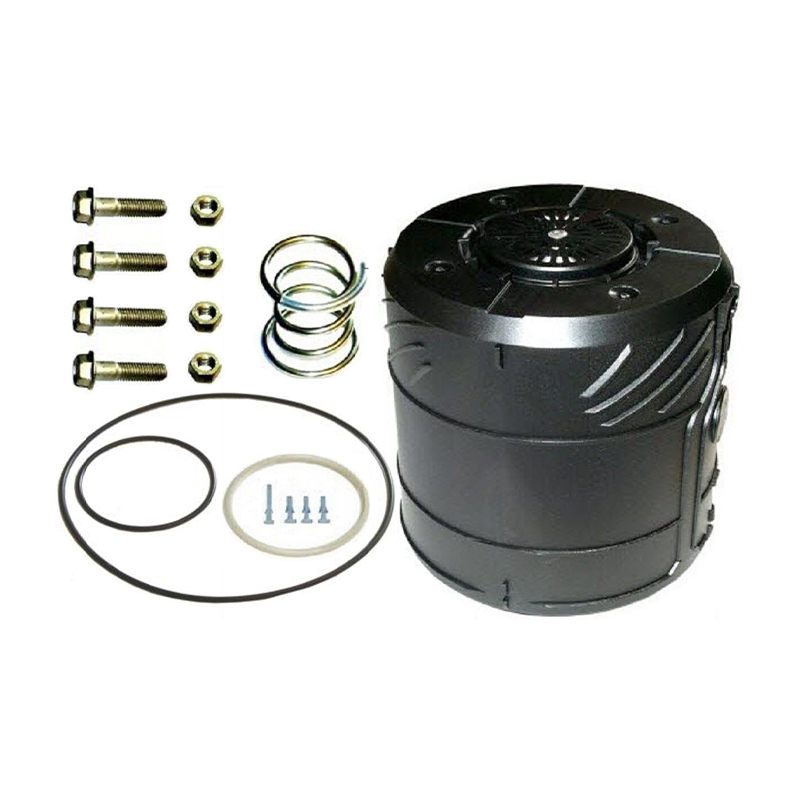
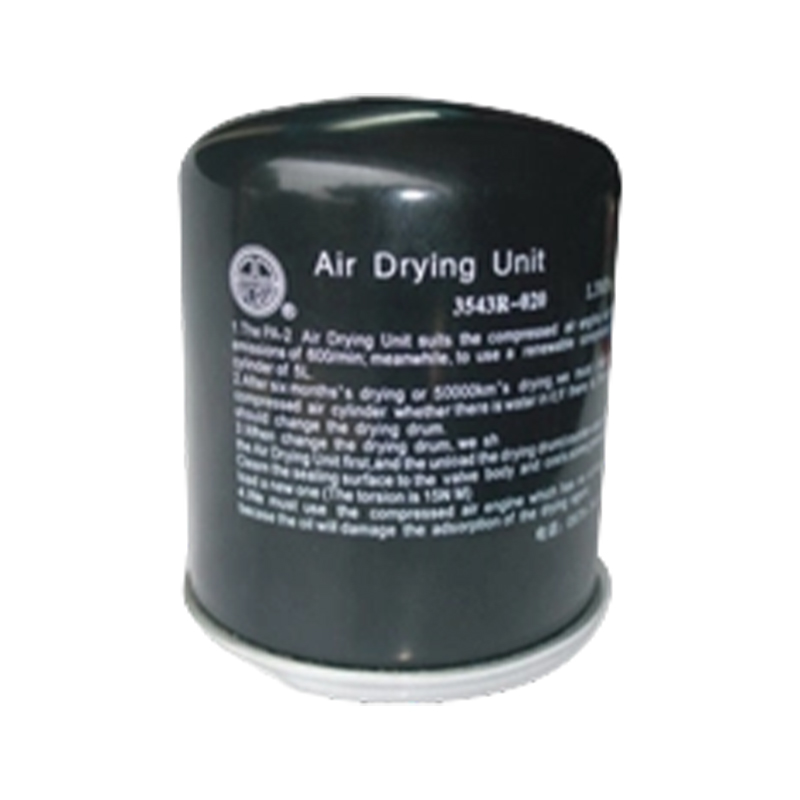
Ang air dryer is installed between the air compressor and the air tank. Its main function is to remove moisture and oil from the compressed air to prevent ice and corrosion inside the system. If the moisture in the air is not removed in time, it will cause the brake line to freeze in cold weather, seriously affecting the braking performance. The air dryer contains a desiccant inside, which can effectively absorb moisture, and is equipped with an automatic drainage device to keep the air dry and clean.
tangke ng hangin
Ang air tank is used to store compressed air that has been dried to ensure that the brake system has a stable and continuous air supply when in use. The air tank is usually divided into a main air tank and an auxiliary air tank, and the capacity is determined according to the size of the vehicle and the braking demand. Condensation often accumulates inside the air tank and needs to be discharged regularly to prevent internal corrosion and blockage of the pipeline.
Balbula ng preno (balbula ng preno ng paa)
Ang brake valve is a key component for the driver to control air brakes. When the brake pedal is pressed, the brake valve adjusts the air pressure to the brake chamber, drives the brake mechanism to operate, and achieves vehicle deceleration or parking. The brake valve used in modern trucks usually integrates pressure feedback and multi-stage adjustment functions to ensure sensitive braking response and safety and reliability.
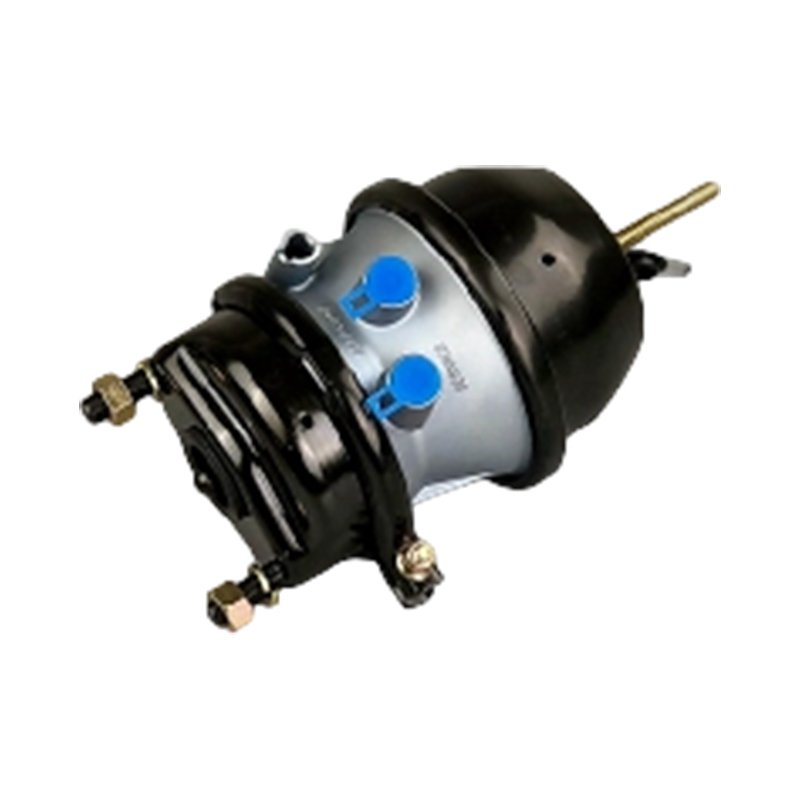
Brake air chamber
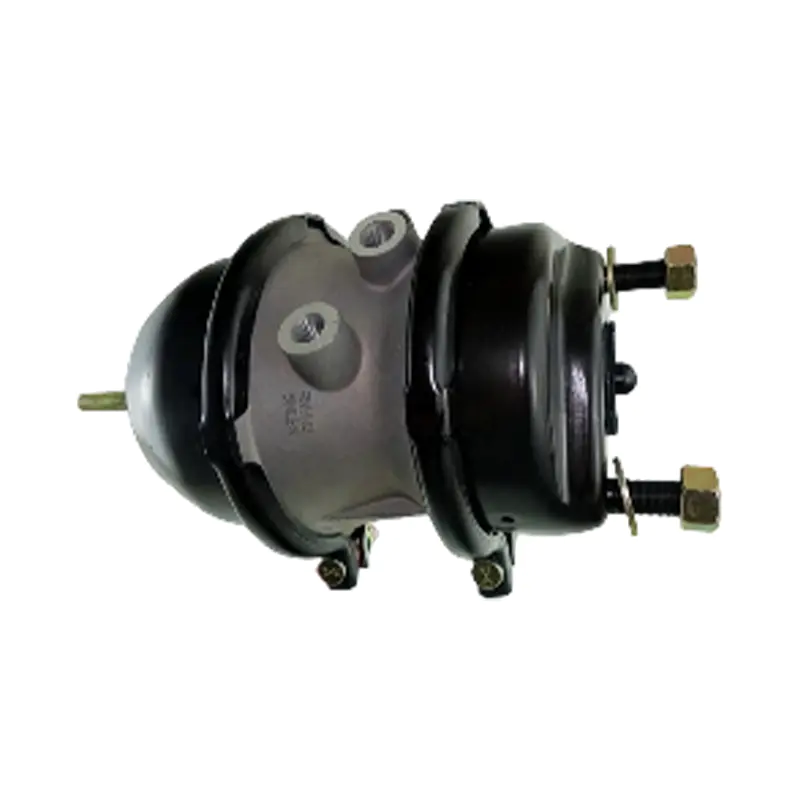
Ang brake air chamber is the core component that converts air pressure into mechanical force. A diaphragm or piston is arranged in the air chamber, which pushes the connecting rod after receiving the air pressure from the brake valve, and drives the brake shoe or brake pad to press the brake drum or brake disc. Brake chambers are divided into service brake chambers and spring brake chambers. The service brake chamber is mainly responsible for braking when the vehicle is driving, while the spring brake chamber is used for parking and emergency braking.
Spring brake chamber
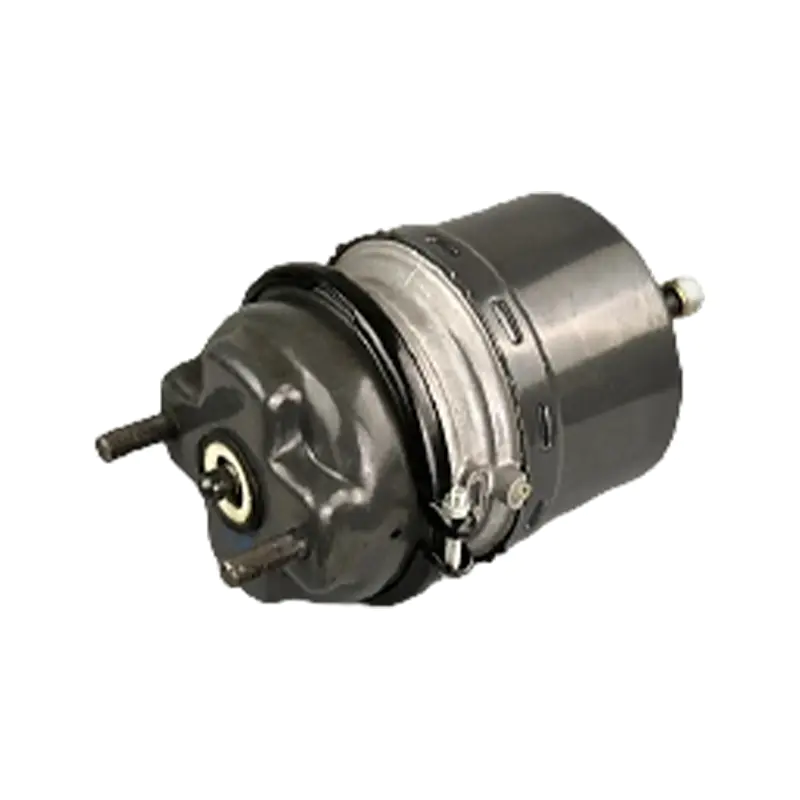
Ang spring brake chamber is equipped with a strong preload spring, which uses the mechanical force of the spring to maintain the braking state. This component is mostly used for parking brakes to ensure that the vehicle does not slip when parking. After the engine is started and inflated, the air pressure will compress the spring and release the braking state. The safety performance of the spring brake chamber is extremely important, and the integrity and air pressure of the spring need to be checked regularly.
Brake connecting rod at regulator
Ang brake connecting rod transmits the thrust of the brake chamber to the brake mechanism to complete the conversion of air pressure to mechanical force. The regulator is responsible for automatically or manually adjusting the gap between the brake shoe and the brake drum to compensate for the wear of the brake shoe and maintain the braking efficiency. The automatic regulator can reduce the frequency of manual adjustment and improve the stability and safety of the system.
Linya ng preno
Ang brake line includes the air pipeline connecting the compressor, air tank, brake valve and air chamber. The pipeline material must be resistant to high pressure, corrosion and cold, and is usually made of a combination of rubber hoses and steel hard pipes. Reasonable pipeline design can prevent air pressure leakage and mechanical damage, and is the basis for ensuring the air tightness and stability of the brake system.
Balbula ng kaligtasan
Ang safety valve is installed at the air tank and key pipeline positions to prevent the system air pressure from exceeding the set upper limit. When the system air pressure rises abnormally, the safety valve automatically opens to release excess gas to avoid bursting of the air tank or pipeline and ensure system safety. The safety valve must be inspected regularly to ensure its reliability.
Mga pantulong na kagamitan
Ang air brake system is equipped with a variety of auxiliary devices, such as barometers, air pressure alarms and pressure sensors. The barometer provides the driver with real-time air pressure information, and the air pressure alarm sounds an alarm when the air pressure is lower than the safety threshold, reminding the driver to deal with it in time. The pressure sensor provides data support for the vehicle's electronic control unit to ensure intelligent management of the system.
Paano binabago ng silid ng preno ang presyon ng hangin sa mekanikal na puwersa?
Ang brake chamber is a key actuator in the truck air brake system. Its core function is to convert the air pressure energy of compressed air into mechanical force, thereby driving the brake mechanism to slow down or stop the vehicle. The design structure and working principle of the brake chamber are directly related to the response speed of the brake system and the stability of the braking force.
Pangunahing istraktura ng silid ng preno
Ang brake chamber is mainly composed of a chamber shell, a diaphragm (or piston), a push rod and a spring. The chamber shell is made of solid metal material, and the interior is divided into two main spaces: the air pressure chamber and the spring chamber. The diaphragm is usually made of wear-resistant rubber material, with good sealing performance and can withstand repeated changes in air pressure. The push rod connects the diaphragm or piston to transmit the thrust generated by the air pressure to the brake mechanical part.
Functional na pagkakaiba sa pagitan ng air pressure chamber at spring chamber
Ang air pressure chamber is the part of the brake chamber that receives compressed air. Air enters the air pressure chamber from the brake valve through the pipeline, and the air pressure increases, pushing the diaphragm or piston outward. The spring chamber is equipped with a preloaded spring to provide reverse force and is used for parking brakes. When the air pressure is low, the spring force pushes the push rod back to the initial position and releases the brake state.
Prinsipyo ng pagtatrabaho ng conversion ng presyon ng hangin sa mekanikal na puwersa
Kapag humakbang ang driver sa pedal ng preno, ipinapasok ng balbula ng preno ang naka-compress na hangin sa silid ng presyon ng hangin ng silid ng hangin ng preno. Ang presyon ng hangin sa silid ng presyon ng hangin ay mabilis na tumataas, na kumikilos sa ibabaw ng dayapragm upang makabuo ng thrust. Ang magnitude ng thrust ay proporsyonal sa presyon ng hangin at sa lugar ng diaphragm. Ang dayapragm ay lumalawak palabas sa ilalim ng pagkilos ng presyon ng hangin, na nagtutulak sa konektadong tulak na baras upang gumalaw nang axially. Ang paggalaw ng push rod ay nagtutulak sa connecting rod at ang adjustment mechanism para i-convert ang air pressure energy sa mechanical force, na inilalapat sa brake shoe o brake pad para makamit ang clamping ng brake drum o brake disc.
Mechanical transmission ng push rod movement
Ang end of the push rod is usually connected to the brake connecting rod through a pin or a ball head. The axial movement of the push rod drives the brake mechanism to work. The brake connecting rod converts the linear motion of the push rod into the clamping motion of the brake shoe, forming friction and generating braking force. The distance the push rod moves determines the magnitude of the braking force, and a reasonable push rod stroke design ensures the linearity and sensitivity of the braking effect.
Ang difference between diaphragm and piston and their influence
Ang diaphragm structure in the brake chamber uses a flexible diaphragm to transmit air pressure thrust. It has a simple structure and light weight, and is suitable for light and medium trucks. The piston chamber uses a rigid piston instead of a diaphragm, which has better sealing and is suitable for heavy vehicles. The piston structure reacts faster to changes in air pressure, and the mechanical force transmission is more stable, which improves braking performance and reliability.
Mga espesyal na function ng spring brake chamber
Ang spring brake chamber is equipped with a large preload spring outside the air pressure chamber, which is often used for parking brakes. During normal operation, the air pressure compresses the spring, the push rod is in a loose state, and the brake is released. When parking or emergency braking, the system air pressure is cut off, the spring releases energy to push the push rod, and the mechanical force acts on the brake mechanism to lock the wheel and achieve parking brake. The spring brake chamber ensures that the vehicle can remain in a safe parking state even if the air source is interrupted.
Ang sikip ng hangin at bilis ng pagtugon ng silid ng preno
Ang air tightness inside the chamber directly affects the effective conversion and response speed of air pressure energy. Poor sealing will cause air pressure leakage, weaken the push rod pushing force, and increase the risk of brake failure. High-quality diaphragm materials and sealing design ensure that the brake chamber maintains good performance under extreme working conditions. The rapid air pressure charging and discharging process ensures rapid braking response and improves driving safety.
Pagpapanatili at pagpapakita ng kasalanan ng mga silid ng preno
Ang mga karaniwang pagkakamali gaya ng nabasag na brake chamber diaphragms, push rod jamming o spring fatigue ay maaaring humantong sa brake failure o parking brake failure. Ang regular na pagsuri sa air tightness ng air chamber at pag-detect ng push rod stroke at spring status ay ang susi sa pagtiyak ng reliability ng brake system. Ang pagsubok sa presyon ng hangin at pagtuklas ng pagtagas ay maaaring makakita ng mga nakatagong panganib nang maaga at maiwasan ang mga aksidente sa pagmamaneho.
| Long Stroke Brake Chamber | |||||||||||||||||||||||||||||||||||||||||||||||||||||||||||||||||||||||||||||
|

Bakit mahalaga ang mga air dryer sa mga air brake system
Ang mga air dryer ay isang kailangang-kailangan na pangunahing bahagi sa mga air brake system ng trak. Ang pangunahing tungkulin nito ay alisin ang kahalumigmigan at mga dumi mula sa naka-compress na hangin upang matiyak ang normal na operasyon at pangmatagalang tibay ng mga panloob na tubo at mga bahagi ng sistema ng preno. Ang papel ng mga air dryer ay direktang nauugnay sa pagiging maaasahan, kaligtasan at gastos sa pagpapanatili ng sistema ng preno.
Halumigmig sa naka-compress na hangin at mga panganib nito
Ang air brake system relies on an engine-driven air compressor to supply high-pressure air. After the air is compressed, the temperature rises, and the water vapor in the air begins to condense into water droplets during the cooling process. If these moisture are not effectively treated, they will enter the air tank and pipeline with the air, causing a variety of serious problems. Condensed water accumulates inside the pipeline and may freeze in a low temperature environment, blocking the air path and causing brake failure. Moisture can also cause rust and corrosion of internal parts of the system, reduce equipment life and cause leaks. Excessive moisture can also affect air pressure stability and cause insensitive brake response.
Prinsipyo ng pagtatrabaho ng air dryer
Karaniwang naka-install ang mga air dryer sa pagitan ng air compressor at ng air tank. Ang pangunahing bahagi nito ay isang desiccant (tulad ng silica gel o molecular sieve), na maaaring mahusay na sumipsip ng kahalumigmigan mula sa hangin. Kapag ang compressed air ay pumasok sa dryer, ang moisture ay nasisipsip ng adsorbent, at ang hangin na ibinubuhos pagkatapos ng paggamot ay nananatiling tuyo at malinis. Ang mga modernong air dryer ay kadalasang nilagyan ng mga automatic drain valve upang regular na mag-discharge ng moisture at impurities na naipon sa adsorbent upang maiwasan ang pag-iipon ng tubig at pagbara, na tinitiyak ang isang pangmatagalan at matatag na epekto ng pagpapatuyo.
Pag-iwas sa pagkabigo ng yelo sa sistema ng preno
Sa mababang temperatura na kapaligiran, ang kahalumigmigan sa pipeline ng hangin ay napakadaling mag-freeze, na humaharang sa balbula ng preno at silid ng hangin, na nagiging sanhi ng pagkabigo ng preno o kahit na pagkawala ng kontrol ng sasakyan. Ang mga air dryer ay epektibong nag-aalis ng kahalumigmigan at pinipigilan ang condensed water accumulation, na lubos na binabawasan ang panganib ng pagbara ng yelo. Lalo na para sa mga sasakyang naglalakbay sa malamig na lugar o sa taglamig, ang kahalagahan ng mga air dryer ay partikular na kitang-kita, na direktang ginagarantiyahan ang kaligtasan at katatagan ng pagpepreno ng sasakyan.
Protektahan ang mga pangunahing bahagi ng sistema ng pagpepreno
Ang internal pipes, valves, air chambers and air tanks of the braking system are all precision machinery and sealing components, which are extremely susceptible to moisture erosion. Long-term water vapor intrusion can cause metal rust, aging of sealing rings, and valve jamming, affecting braking performance. Air dryers extend the service life of these key components by providing dry air, reduce failure rates and maintenance costs, and improve the overall operating efficiency of vehicles.
Pagbutihin ang katatagan ng presyon ng hangin ng system at bilis ng pagtugon
Ang labis na kahalumigmigan ay maaaring magdulot ng pagbabagu-bago ng presyon ng hangin at pagtagas, na nakakaapekto sa higpit ng hangin at katatagan ng presyon ng hangin ng sistema ng pagpepreno. Maaaring tiyakin ng mga air dryer na ang hangin na pumapasok sa tangke ng hangin at mga pipeline ay tuyo at dalisay, at matiyak ang isang matatag na supply ng presyon ng hangin. Sinusuportahan ng matatag na presyon ng hangin ang mahusay na pagkilos ng silid ng preno, pinapabuti ang bilis ng pagtugon sa pagpreno at puwersa ng pagpepreno, at pinapabuti ang kaligtasan sa pagmamaneho.
Bawasan ang kahirapan sa pagpapanatili at gastos
Ang mga system na walang air dryer o may mahinang epekto sa pagpapatuyo ay nangangailangan ng madalas na pagpapatuyo, paglilinis ng mga tubo, at pagpapalit ng mga corroded at nasirang bahagi, pagtaas ng dalas ng pagpapanatili at mga gastos. Binabawasan ng mga air dryer ang manual intervention at maintenance workload sa pamamagitan ng awtomatikong pag-dehumidify at pag-draining ng tubig. Bumababa ang rate ng pagkabigo ng system, tumataas ang oras ng pagpapatakbo ng sasakyan, at makabuluhang nabawasan ang gastos sa pagpapatakbo.
Mga uri at naaangkop na sitwasyon ng mga air dryer
Kasama sa mga karaniwang air dryer ang mga adsorption dryer at refrigerated dryer. Ang mga adsorption dryer ay sumisipsip ng moisture sa pamamagitan ng desiccant, may simpleng istraktura, at malawakang ginagamit sa mga air brake system ng trak. Ang mga pinalamig na dryer ay nagpapalapot at naglalabas ng kahalumigmigan sa pamamagitan ng pagpapababa ng temperatura ng hangin, na angkop para sa mga espesyal na pangangailangan sa kapaligiran. Ang iba't ibang uri ng mga dryer ay pinagsama sa kapaligiran ng pagpapatakbo ng sasakyan at mga kondisyon sa pagtatrabaho upang piliin ang naaangkop na modelo upang matiyak ang pinakamahusay na epekto sa pagpapatuyo.
Mga pangunahing punto para sa pagpapanatili ng mga air dryer
Kailangang regular na palitan ang desiccant upang maiwasan ang pagkabigo ng saturation ng desiccant. Ang pagpapaandar ng drain valve ay kailangang mapanatili nang normal upang matiyak ang napapanahong pag-alis ng condensed water at mga dumi. Ang pabahay at interface ng air dryer ay dapat suriin para sa mga tagas at mahusay na pagganap ng sealing. Ang hindi wastong pagpapanatili ay magiging sanhi ng pagbagsak ng dryer, na nakakaapekto naman sa kaligtasan ng pagganap ng buong sistema ng preno.
| Air Dryer ng Brake System | |||||||||||||||
|

Paano kinokontrol ng brake valve (foot valve) ang presyur ng hangin ng preno?
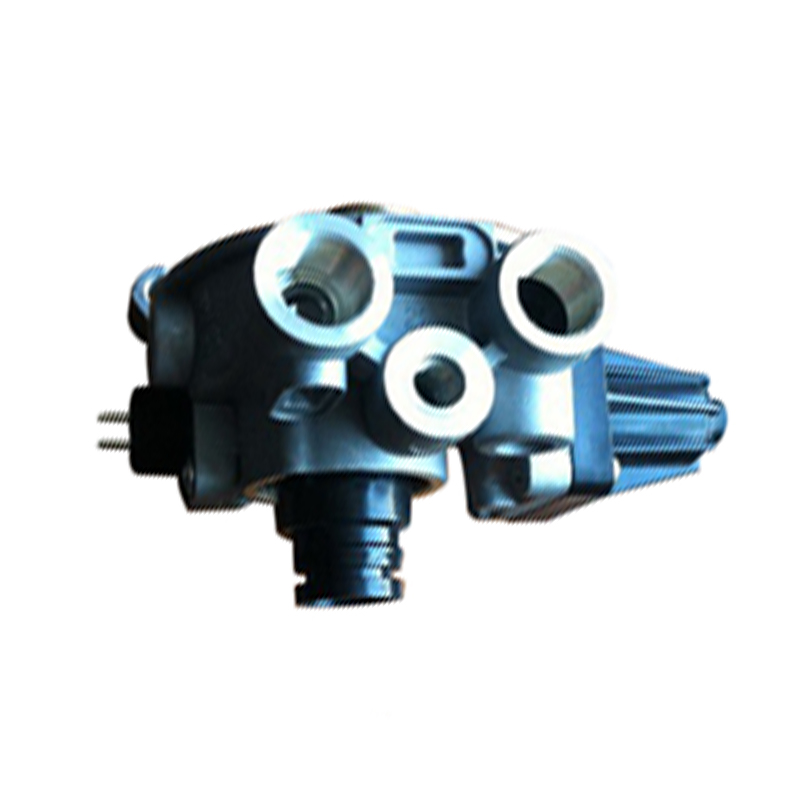
Ang brake valve, also known as the foot brake valve, is a key component in the truck air brake system where the driver directly controls the brake air pressure. Its main function is to accurately adjust the air pressure according to the force and stroke of the driver's foot on the brake pedal, and drive the brake chamber to achieve vehicle braking. The design and working principle of the brake valve directly affect the response speed, stability and safety performance of the brake system.
Pangunahing istraktura ng balbula ng preno
Ang brake valve is mainly composed of a valve body, a piston or a sliding valve, a spring, a sealing ring and an adjustment mechanism. There are multiple air passages inside the valve body, which are responsible for guiding the air flow. The piston or sliding valve moves under the action of the spring force and air pressure to control the air flow interruption. The brake pedal drives the piston to move through a mechanical connecting rod or an electronic sensor to complete the air pressure regulation.
Prinsipyo ng pagtatrabaho ng balbula ng preno
Kapag ang driver ay nakatapak sa pedal ng preno, ang piston sa loob ng balbula ng preno ay umuusad pasulong kasama ang pedal stroke. Ang paggalaw ng piston ay nagbabago sa pagbubukas at pagsasara ng estado ng air circuit sa loob ng valve body, at kinokontrol ang hangin mula sa air tank patungo sa air pressure chamber ng brake chamber. Ang mas malalim na pedal ay natapakan, mas malaki ang balbula na bubukas, at mas mataas ang presyon ng hangin na pumapasok sa silid ng preno. Ang tumaas na presyon ng hangin ay nagtutulak sa brake chamber diaphragm o piston, na bumubuo ng mechanical thrust upang makamit ang pagpepreno. Bitawan ang pedal, ang piston ay nag-reset, ang air circuit ay sarado, ang presyon ng hangin ay inilabas, at ang preno ay pinakawalan.
Tumpak na kontrol sa regulasyon ng presyur ng hangin ng preno
Ang brake valve achieves continuous variable adjustment of air pressure through an internal adjustment mechanism. The valve body is designed with a pressure adjustment spring and a feedback device, which can finely adjust the output air pressure according to the pedal force. Accurate air pressure control ensures a smooth transition of braking force, avoids braking shock and vehicle shaking, and improves driving comfort and safety.
Multi-way na disenyo ng air circuit at garantiya sa kaligtasan
Ang brake valve is equipped with multiple air circuits, which lead to different air tanks and air chambers to ensure stable air pressure supply. Some brake valves are equipped with a dual-circuit design, one circuit controls the front axle air chamber and the other controls the rear axle air chamber to improve braking safety. Some advanced brake valves also have an air pressure protection function. When the system air pressure is lower than the set value, the braking force is automatically limited to prevent brake failure.
Bilis ng pagtugon at pagganap ng sealing ng brake valve
Ang internal sealing ring and air circuit design of the brake valve directly affect the response speed of air pressure changes. Efficient sealing prevents air leakage and ensures stable air pressure. The brake valve with a compact structure and reasonable spring force can quickly respond to the driver's braking command, achieve rapid braking response, and enhance driving safety.
Koordinasyon ng foot brake valve at parking brake system
Ang foot brake valve is mainly responsible for service braking during driving. The brake valve of some models integrates the parking brake function or is linked with the parking brake valve. The spring brake chamber is controlled by air pressure changes to realize the opening and release of the parking brake. The system design ensures that the parking brake and foot brake work together to meet different driving needs.
Pagpapanatili at pagpapakita ng pagkabigo ng mga balbula ng preno
Ang pagtanda ng brake valve seal, piston jamming o spring failure ay mga karaniwang sanhi ng pagkabigo. Ito ay humahantong sa insensitive na air pressure regulation, air leakage o hindi pantay na pagpepreno. Regular na suriin ang air tightness, pedal travel at internal component status ng brake valve upang matiyak ang normal na performance nito. Kung may nakitang sira, dapat itong ayusin o palitan sa oras upang maiwasan ang mga panganib sa kaligtasan.
Anong papel ang ginagampanan ng safety valve sa air brake system?
Ang safety valve is a vital protective component in the air brake system. It is responsible for releasing excess air pressure when the system pressure rises abnormally, preventing system components from being damaged by overpressure, and ensuring the safety and stable operation of the entire brake system. Although the safety valve does not directly participate in the braking action, it plays an important role in the operation of the system.
Ang basic structure and principle of the safety valve
Ang safety valve is usually composed of a valve body, a valve seat, a spring, a valve core and an adjustment mechanism. The valve core seals the valve seat under the action of the spring force to maintain the closed state of the system. The spring preload sets the maximum safe air pressure of the system. When the system air pressure exceeds the set value, the air pressure overcomes the spring force to push the valve core open, and the overpressure gas is released through the exhaust port. After the air pressure drops to a safe range, the spring resets the valve core, reseals the valve seat, and the system returns to normal working state.
Kontrolin ang pinakamataas na limitasyon ng presyon ng hangin upang maiwasan ang sobrang presyon ng system
Ang air brake system is supplied with air by an air compressor. If the control system fails or the compressor continues to work without stopping, the air pressure may continue to rise. Overpressure can damage and even burst components such as air reservoirs, brake valves, pipelines, and air chambers. The safety valve opens the exhaust in time before the air pressure reaches a dangerous level through the set opening pressure (usually 10%~15% of the upper limit of the system working pressure), playing the role of "the last line of defense" to avoid system damage and accidents.
Protektahan ang air compressor at mga bahagi ng air circuit
Ang air compressor is a high-frequency component in the brake system, and it is very easy to be damaged due to excessive back pressure during long-term operation. The safety valve releases excess air pressure in the system compression chamber or the main air tank, effectively reducing the compressor load and preventing problems such as shaft seal damage and cylinder jamming caused by back pressure. At the same time, the safety valve also protects the pipeline interface and air circuit valve to avoid impact rupture caused by sudden pressure changes and extend the service life of the system.
Tiyakin ang matatag na paggana ng sistema ng pagpepreno ng sasakyan
Ang air brake system must operate in a stable air pressure environment. Excessive air pressure not only damages the components, but also causes excessive braking response and excessive braking force, causing tire locking and vehicle loss of control. The safety valve limits the peak pressure and keeps the system pressure within a safe range, ensuring that the braking response is linear and controllable, and enhancing the driver's sense of safety and predictability.
Ang rationality of the set pressure value and the system match
Ang opening pressure of the safety valve should be higher than the normal working pressure of the brake system (usually 0.81.0 MPa), but lower than the maximum pressure bearing capacity of the system. It is generally set to 1.11.2 MPa. If the pressure is set too low, it is easy to open frequently and cause unstable air pressure; if it is set too high, it loses its protective effect. Reasonable setting requires comprehensive consideration of factors such as vehicle air path volume, braking frequency, and compressor air output to ensure that the safety valve intervenes only under real overpressure conditions, taking into account safety and system efficiency.
Lokasyon ng pag-install at saklaw ng pagkilos ng safety valve
Ang safety valve is usually installed on the main air tank or the main line of the total air path, giving priority to releasing the total pressure of the system. Some systems are also equipped with local safety valves on branch air tanks or independent air paths to protect branch circuit components. The installation location should ensure smooth exhaust and stay away from high temperature or flammable areas to prevent secondary risks caused by exhaust. The multi-level protection design enhances the robustness of the system and improves the safety level of the vehicle.
Mga kinakailangan sa materyal at tibay ng mga safety valve
Balbula ng kaligtasans are subjected to high-pressure gas for a long time, and key components such as valve cores, springs, and valve seats must have high strength, corrosion resistance, and fatigue resistance. Common materials include stainless steel, chromium-molybdenum alloy, engineering plastics, etc. The sealing part must have high temperature resistance and pressure change resistance to ensure that the valve remains sealed reliably during high-frequency opening and closing to avoid air pressure leakage or malfunction.
Inspeksyon sa pagpapanatili at panganib sa pagkabigo ng mga balbula sa kaligtasan
Balbula ng kaligtasans are passive action devices. Long-term non-operation is prone to problems such as spring fatigue, valve core jamming, and seal aging. Regular opening and closing tests, cleaning of carbon deposits and foreign matter, and testing of opening pressure are necessary means to maintain its functional reliability. A failed safety valve may not be able to open when overpressure occurs, resulting in system damage or accidents; it may also open prematurely, affecting the inflation speed and efficiency of the brake system.
Pakikipagtulungan sa pagitan ng safety valve at pressure regulation system
Ang mga air brake system ay kadalasang nilagyan ng mga pressure regulator, pressure switch, at mga safety valve na nagtutulungan. Kinokontrol ng pressure regulator ang pagsisimula at paghinto ng compressor, sinusubaybayan ng pressure switch ang feedback ng air pressure, at ang safety valve ay ginagamit bilang isang redundant protection device upang matiyak na epektibo ang maraming mekanismo ng kaligtasan. Ang disenyo at pagsasaayos ng safety valve ay dapat na iugnay sa buong air pressure control system upang maiwasan ang maling pag-trigger o overlapping na mga function at mapabuti ang pangkalahatang kaligtasan ng system.
Ano ang mga prayoridad sa pang-araw-araw na pagpapanatili ng air brake system?
Bilang isang kritikal na aparatong pangkaligtasan sa mga mabibigat na sasakyan (gaya ng mga trak, bus, at trailer), ang katatagan ng pagpapatakbo ng air brake system ay direktang nauugnay sa epekto ng pagpepreno at kaligtasan ng trapiko ng buong sasakyan. Ang sistema ay binubuo ng isang air compressor, isang air reservoir, isang dryer, isang brake valve, isang brake air chamber, isang air pipe, at iba't ibang bahagi ng kontrol. Mayroon itong kumplikadong istraktura at madalas na gumagana. Ang pang-agham at standardized na pang-araw-araw na pagpapanatili ay hindi lamang maaaring pahabain ang buhay ng system, ngunit epektibo ring maiwasan ang biglaang pagkabigo ng preno.
Suriin ang air tightness ng system
Ang air tightness of the system is the core of ensuring stable air pressure. During maintenance, it is important to check whether there is air leakage at various pipe joints, hoses, connectors, welds of air reservoirs, and valve body interfaces. Use soapy water smearing method or a special leak detector to detect subtle leaks. For rubber hoses, check whether they are aging, cracked, or falling off. Good air tightness can prevent the system air pressure from dropping too quickly, ensuring the reliability of emergency braking and parking brakes.
Regular na alisan ng tubig ang tubig at mga dumi mula sa tangke ng hangin
Ang air tank is a gathering place for compressed air and is also the main area for condensed water and impurities to deposit. If it is not discharged in time, the water will corrode the cylinder, block the valve, and seriously affect the braking response. The air tank drain valve should be opened every day after parking to drain manually, especially in an environment with high humidity or low temperature. Some vehicles are equipped with automatic drainage devices, and their drainage function should also be checked regularly to prevent water accumulation.
Suriin ang gumaganang kondisyon ng air dryer
Ang air dryer is the first line of defense to prevent moisture from entering the brake system. It is necessary to regularly check whether the dryer filter element or adsorbent is saturated and ineffective. If it is found that the drying effect has deteriorated or a large amount of water is discharged from the air tank, the dryer filter element should be replaced in time. Note that the dryer exhaust port should be unobstructed and the exhaust valve should be sensitive to prevent water accumulation or freezing.
Panatilihing tumutugon ang balbula ng preno
Ang brake valve is the most directly related component of the air brake system to the driver's control. The brake valve pedal stroke should be checked regularly to see if it is appropriate, if the action is smooth, and if there is any jamming, air leakage or poor return. Check if the air chambers respond consistently during braking to avoid brake deflection or tail swinging due to asynchronous braking of the front and rear wheels. Disassemble and clean or replace seals if necessary.
Suriin ang brake chamber at push rod status
Ang brake chamber converts air pressure into mechanical braking force, and its reliability directly affects the braking effect. Focus on checking whether the air chamber shell is deformed, rusted or cracked, whether the push rod is freely retracted, and whether the dust cover is intact and undamaged. The spring mechanism of the parking brake spring chamber must function normally and the exhaust channel must be unobstructed. The push rod stroke must meet the manufacturer's standards to avoid insufficient braking force or damage to the air chamber.
Panatilihing matatag ang air pipe at joint connection
Ang air pipe connecting the various components in the brake system needs to have sufficient pressure resistance and heat resistance. Check the pipeline for looseness, detachment, rupture, expansion or wear on a daily basis. In particular, the hoses at the chassis or active parts of the vehicle are susceptible to vibration and dust. The connection joints should be tightened reliably, and the quick-connect joints should be cleaned of foreign objects regularly to prevent leakage. Pipes used for a long time should be replaced according to the degree of aging.
Suriin ang emergency brake at parking brake system
Ang emergency brake at parking brake ay mahalagang mekanismo upang matiyak na ang sasakyan ay maaari pa ring huminto nang maaasahan kapag naputol ang gas o nakapatay ang makina. Ang pang-araw-araw na maintenance ay dapat ma-verify kung ang spring brake air chamber ay maaaring awtomatikong ilapat ang preno kapag ang gas ay naputol. Ang parking lever o switch ay dapat na tumpak at sensitibo. Ang kapasidad sa pagpapanatili ng presyon ng paradahan pagkatapos maputol ang sistema ay dapat matugunan ang pamantayan upang maiwasan ang pag-slide ng sasakyan dahil sa pagtagas ng presyon ng hangin.
Detection ng pressure gauge at alarm device
Ang pressure gauge on the instrument panel is an important basis for the driver to understand the system status. It is necessary to confirm that the pressure gauge display is accurate and without deviation on a daily basis. The high-pressure and low-pressure alarm indicators and buzzers should alarm in time when the air pressure is abnormal. If necessary, check the working status of the electrical circuit and sensor to avoid blind driving caused by the failure of the alarm system.
Magsagawa ng system air pressure stability test
Obserbahan ang air pressure build-up speed sa pamamagitan ng pagpapatakbo ng engine sa idle speed at suriin kung sapat ang output ng compressor. Dapat panatilihin ng system ang bilis ng pagbaba ng presyon pagkatapos patayin ang makina upang matugunan ang pamantayan. Ang oras ng pagtugon ng preno at ang rate ng pagbaba ng presyon ay maaaring maobserbahan sa pamamagitan ng manu-manong pagtapak sa pedal ng preno upang hatulan ang kakayahan sa pagtugon ng system at kapasidad ng imbakan ng hangin.
Ang Aming Mga Pangunahing Produkto
Copyright © Zhejiang Gongzheng Machinery Co., Ltd. Lahat ng Karapatan ay Nakalaan.
